Jump to a section
Which maps does Hood Warfare 2 actually offer?
The Steam description names The Trenches and Chicago Mall outright, and describes a downtown area and suburban streets without printing either as a selectable entry.
A hands-on beginner walkthrough reviewed on 2026-10-23 lists the environments it played: Suburbs, Supermarket, Chicago Mall, Downtown and The Trenches. Patch 1.0.10 also refers to a small supermarket map while discussing spawns. Between them, the two reports turn both store settings into selectable names and add Supermarket, which the store copy never mentions. The walkthrough describes one further small, symmetric arena-style map without naming it.
Our assessment: Five named maps plus one unnamed arena is the working count. Treat it as a report rather than an inventory: a map can be rotated out, and a walkthrough written in launch week can lag a patch.
| Map | Evidence for the name | What any source says about playing it | Section |
|---|---|---|---|
| Downtown | Store setting reference, plus the dated report | Nothing about layout, spawns or objectives | Downtown ↓ |
| Suburbs | Store setting reference, plus the dated report | Tight backyard fights, heavy cover — one sentence | Suburbs ↓ |
| The Trenches | Named directly in the store description | Nothing; the name is terrain, not a description | The Trenches ↓ |
| Chicago Mall | Named directly in the store description | Nothing in text; the official gallery shows mall interiors | Chicago Mall ↓ |
| Supermarket | Patch 1.0.10 refers to a small supermarket map; the report lists it | “Small”, in a note about spawns — one adjective | Supermarket ↓ |
Each map below is a section rather than a page of its own. For four of the five, the evidence runs out at the name, and splitting a name across five URLs would multiply the page count without adding an answer. Where a source does say something about play — Suburbs, and Supermarket's size — it is quoted, labelled, and used for exactly what it supports.
Reference: Tpose Gaming · How to Play Hood Warfare 2: Start, Killstreaks, Weapons ↗
Practice cards for the four store environments
The official store references four environments below. Separate dated reports also name Supermarket; patch 1.0.2.0 discusses changes on The Strip. Those additional names are documented elsewhere on this page or in updates — they are not invented fifth “official store” maps.
Editorial learning advice — not verified spawn or sightline claims.
Official store reference
Downtown
Practice question: Which street crossings expose you to more than one direction?
- Name the match objective before choosing a first route.
- Pick one covered approach and one alternate if that path is contested.
- List lanes or doorways you cannot watch from your chosen position.
Official store reference
Suburban areas
Practice question: Which entrances can you watch from your chosen position?
- Identify which yards or fences break sightlines.
- Practice one house-to-objective route, then reverse it.
- Note entrances teammates cannot cover at the same time.
Official store reference
The Trenches
Practice question: Can you reach the same objective by an alternative route?
- Confirm the mode objective before committing to a push.
- Map one primary path and one fallback when the first is blocked.
- Call out which approach you cannot see without moving.
Official store reference
Chicago Mall
Practice question: Which entrances and changes of level affect your approach?
- Learn one indoor route to the objective first.
- Find an alternate entrance if the main doors are watched.
- Note level changes (ramps, floors) that split your attention.
No fabricated floorplans or callout diagrams are published here. Contribute a labeled current-build capture if you have one.
What is established about Downtown?
The Steam description refers to a downtown setting, which establishes that the game has street-level urban areas. It does not print “Downtown” as a selectable entry.
The walkthrough reviewed on 2026-10-23 lists Downtown among the maps it played, so the capitalised name is a map a player selected rather than only a description of scenery.
That gap matters when you read older material. A launch-week guide could use “downtown” to mean the setting and a later one to mean the selectable map; the two sentences look identical and describe different things. When you compare notes with another player, write the exact label your menu shows rather than the word downtown.
What no reviewed source supplies: lane layout, spawn positions, objective placement, or the distance between any two of them. Every specific Downtown callout you have seen came from somebody's own session. That is a perfectly good source — it simply is not a published one, and this page will not dress it up as one.
Compare the environment practice cards ↑
Reference: Tpose Gaming · How to Play Hood Warfare 2: Start, Killstreaks, Weapons ↗
What is established about Suburbs?
The Steam description refers to suburban areas: yards, houses and parked vehicles.
The 2026-10-23 walkthrough names Suburbs among the maps it played and describes the fighting there as tight, backyard-scale and heavy on cover.
That is the only published statement about how any of these five maps plays, and it is a sentence rather than a measurement. It supports one expectation — engagements happen at short range, around structures that break line of sight — and it supports nothing about where those structures sit.
Our assessment: If the description holds, a route that depends on long sightlines across open ground is the wrong first thing to test. Take it as a hypothesis for your next session rather than a fact about the map.
The test is small and repeatable: pick a yard, find the piece of cover that lets you watch one entrance without standing in it, and check whether the same gap works from the opposite direction. Two runs, one note.
Compare the environment practice cards ↑
Reference: Tpose Gaming · How to Play Hood Warfare 2: Start, Killstreaks, Weapons ↗
What is established about The Trenches?
The Steam description names The Trenches outright, which makes it the strongest name evidence of the five: developer text, not a report about developer text.
The 2026-10-23 walkthrough also lists it among the maps it played.
“Trenches” describes terrain rather than a place, so the name invites an expectation the sources never confirm. It does not say whether the map is dug in, narrow, or simply named after a neighbourhood, and nothing reviewed here describes its geometry.
Because the name is the only confirmed thing, this is where a session log is worth most: a record of the entrance you used, the cover you broke line of sight behind, and the route that actually reached the objective is new information rather than a restatement of the store page. Send it with the patch number and it is published as a dated observation with credit.
What is established about Chicago Mall?
The Steam description names Chicago Mall outright, and the official screenshot gallery includes indoor retail and mall-interior scenes.
The 2026-10-23 walkthrough lists it among the maps it played.
The screenshots are the useful part and the tempting part. They show that the game renders shop floors and upper levels, which is a real clue about the kind of space the map contains. They do not show where a doorway sits relative to a spawn, because a promotional frame is composed to look good rather than to be navigated.
So the images help you recognise the place when you load in, and cannot help you plan a route through it. Each gallery entry records what its own image does and does not establish, which is the only honest way to use them.
What is established about Supermarket?
Patch 1.0.10 refers to a small supermarket map while discussing spawns. That is developer text, and it is the earliest mention of the map in the reviewed record.
The 2026-10-23 walkthrough lists Supermarket among the maps it played and says nothing about its interior.
Supermarket is named by two sources and described by neither. What exists is a name, one size word from a spawn-related patch note, and confirmation that it is selectable — which is the whole of the record, not a summary of it.
Our assessment: The size word is worth exactly what it costs. If the note is accurate about scale, the map is tight enough that spawn pressure shapes a match more than route planning does — which is a plausible reason the note was about spawns. That is an inference from one adjective.
If your build shows a board or an interior you can describe, that single sentence is what upgrades this section from a name to a place. The contribution form takes it with the patch number attached.
What would turn these sections into layout guides?
The official gallery is good for one job: recognising the kind of space you are standing in. It shows residential yards, urban streets, retail shelves and mall interiors, and all 11 images are captioned by what they can establish rather than being labelled callouts.
What none of them is, is a layout. A layout guide needs four things this wiki does not have for any of the five maps: a capture from a known patch, the mode it was taken in, the starting position, and at least one destination reached by a route a reader can repeat. Without all four, a diagram is decoration.
- Capture the map name and the version string in the same frame, so the two cannot drift apart later.
- Note the mode. A territory objective and a one-life round make different parts of the same map matter.
- Walk one route, then walk it back. The return leg is where most route advice quietly fails.
- Write down what forced you to move: a sightline, a blocked door, cover that stopped working once you were seen from a second angle.
Promotional screenshots fail the first test by design: composed, carrying no version, and not taken in order to be navigated.
Send a capture with its patch number through the contribution form and it is published as a dated observation with credit — the honest form for a single session. Two players capturing the same route is the point at which a claim about a map starts to deserve the word confirmed.
How do you record a useful map practice session?
Map practice checklist — sticky target from the homepage utility strip. Progress stays in this browser.
Use a bot session to investigate these questions. Checklist completion records your preparation, not verified map mastery. Progress stays in this browser.
0 of 5 steps recorded.
My callouts (browser-local notes)
Optional browser-local notes for your own group labels. These stay in this browser until you clear them. They are not official map names and are not uploaded.
How do you learn a crossing without assuming a safe route?
| Moment | Question | Next choice |
|---|---|---|
| Before leaving cover | Where will I stop if someone watches the crossing? | Pick the next reachable obstruction or abandon the crossing. |
| At the corner | Which second direction am I exposing? | Inspect another angle before committing to a fight. |
| After a death | When could the opponent first have seen me? | Use a recording if available; do not infer a wallhack from surprise. |
| After an update | Has the geometry changed? | Relearn the approach before copying an old clip. |
The 1.0.2.0 announcement changes The Strip's buildings and sightlines and removes the Mall's outside-leading door. It supplies reasons to revisit routes, not a replacement map layout. Use the death review and short route practice to find a useful personal approach.
Quick answer
The Steam listing names The Trenches and Chicago Mall and describes downtown and suburban settings. A dated report adds the selectable names Downtown and Suburbs, plus Supermarket, which patch 1.0.10 also mentions. Suburbs is the only map a source describes in play terms — tight backyard fights, heavy cover — and no source gives a layout for any of the five.
Source: Tpose Gaming (independent) · checked 2026-10-23 ↗From the official screenshots
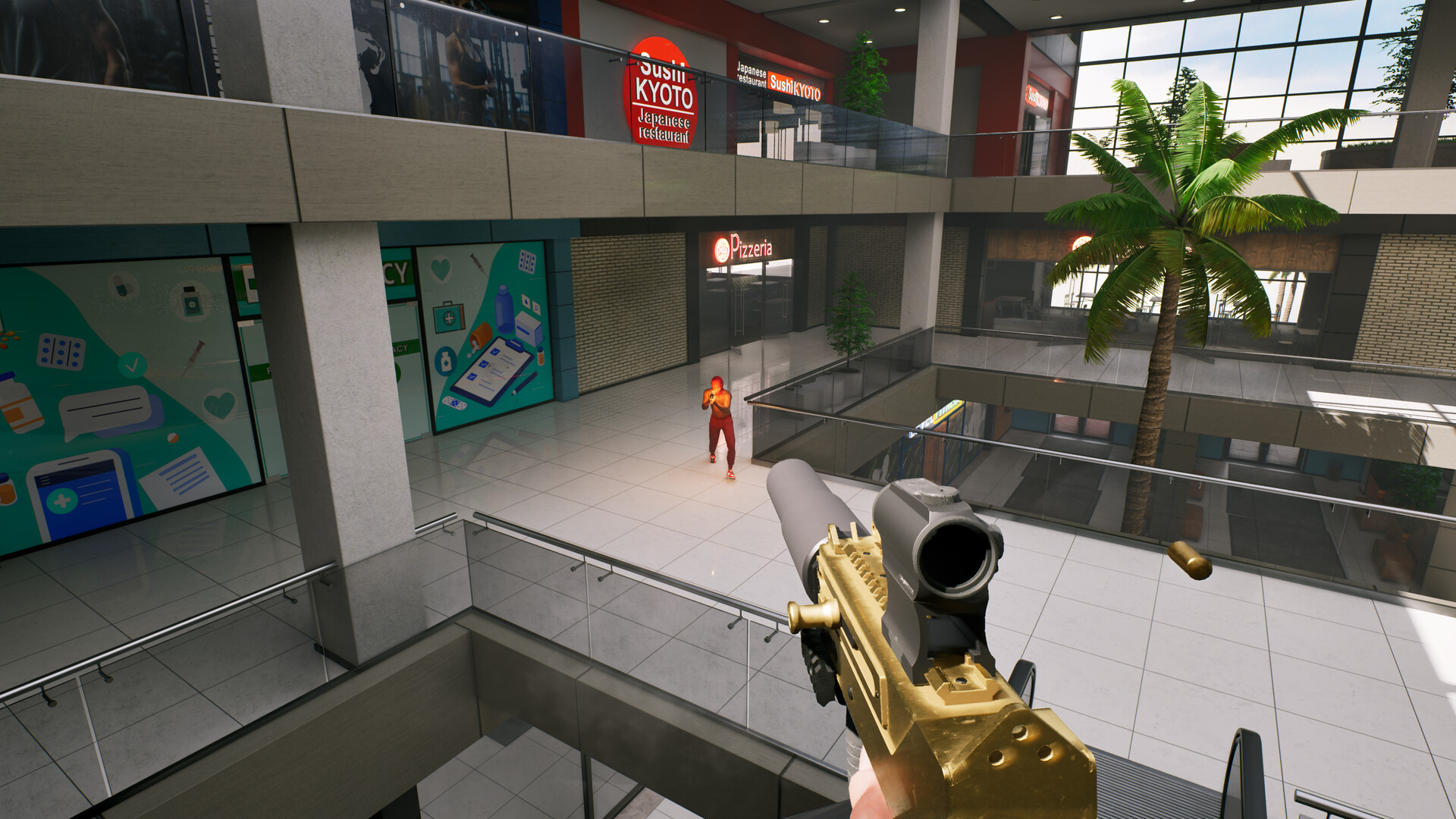
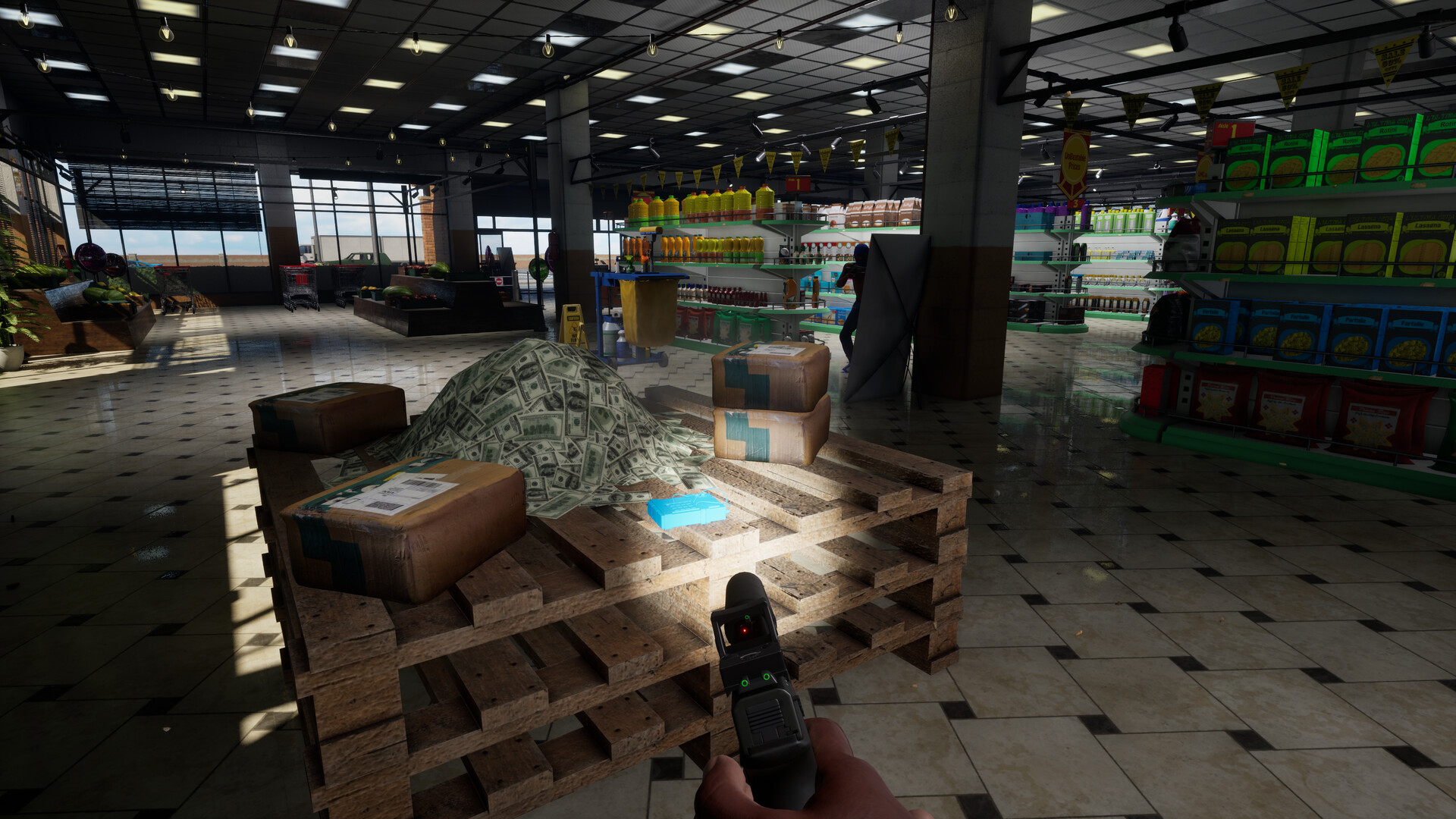
Visual reference from the Steam listing; not a tested map layout or weapon specification. Browse the complete screenshot gallery ↗
Evidence, sources & revision notes
Version & evidence scope: Developer announcements: 1.0.10. Later builds have not been verified here. How we verify ↗
Revision history
- — Removed duplicate practice prose and made the reference wording specific.
- — Strengthened environment practice cards, checklist CTA and optional local callout notes.
- — Clarified evidence wording and connected related player questions.
- — Rewrote answer-withholding sentences into Tier A/B/C claims; added named third-party sources with review dates.
- — Reorganized answers and comparisons around player tasks; retained source limits and existing section links.
- — Added environment anchors, evidence contribution links and a browser-local practice checklist.
- — Added a concrete player task and connected the player handbook.
Did this help you take the next step?
Send details to the editor ↗